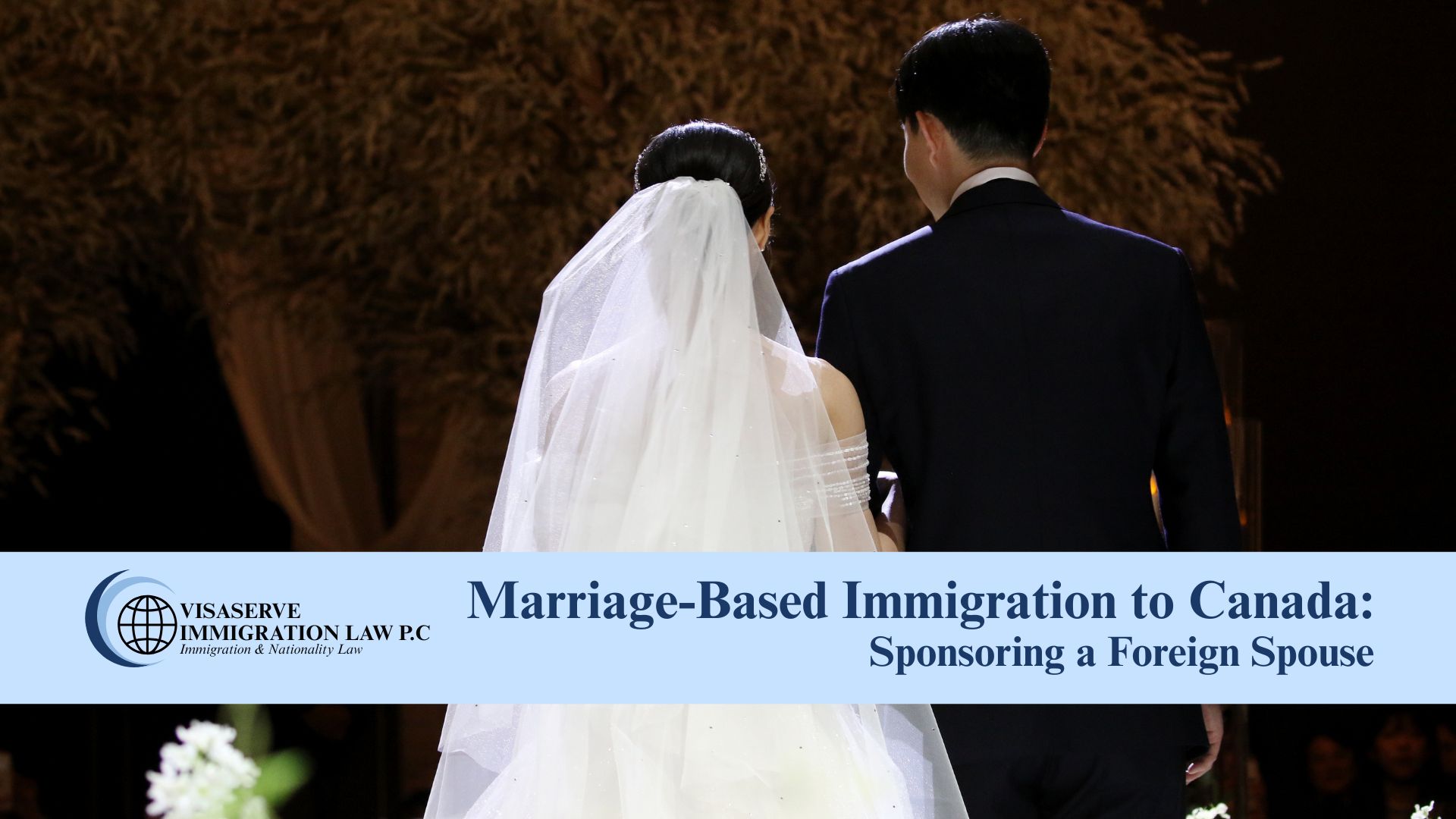
Canadian citizens and permanent residents frequently ask how to sponsor a foreign spouse after marriage. Canada’s Family Class sponsorship program allows eligible sponsors to help their spouse obtain permanent residence, but the process requires careful preparation, accurate documentation, and strategic planning.
Spousal sponsorship applications are administered by Immigration, Refugees and Citizenship Canada (IRCC) and are assessed under the Immigration and Refugee Protection Act (IRPA).
This guide explains eligibility requirements, inland vs. outland options, and key considerations for couples.
Who Can Sponsor a Spouse to Canada?
You may be eligible to sponsor your spouse if you are:
-
A Canadian citizen or permanent resident,
-
At least 18 years old,
-
Residing in Canada (or planning to return if you are a Canadian citizen living abroad),
-
Not barred from sponsoring due to prior undertakings, serious criminality, or defaulted immigration obligations.
Sponsors must also confirm they are not receiving social assistance, except for disability-related assistance.
Permanent residents must be physically residing in Canada to sponsor. Canadian citizens may sponsor while living abroad if they demonstrate intent to return once permanent residence is granted.
Who Can Be Sponsored?
A sponsored spouse may be:
-
Legally married to the sponsor,
-
Living inside or outside Canada,
-
Of any nationality.
Canada also recognizes:
-
Common-law partners (typically 12 months of continuous cohabitation),
-
Certain conjugal partners (limited and case-specific).
Legal marriage cases are generally the most straightforward category from a documentation perspective.
Inland vs. Outland Spousal Sponsorship
Spousal sponsorship applications fall into two primary streams: inland and outland processing.
Inland Sponsorship
-
Sponsored spouse is already living in Canada,
-
Couple resides together in Canada,
-
Sponsored spouse may apply for an open work permit during processing,
-
International travel during processing carries risk,
-
Appeal rights are limited if refused.
Outland Sponsorship
-
Sponsored spouse resides outside Canada,
-
Application processed through a visa office abroad,
-
Sponsored spouse may still visit Canada if eligible,
-
Greater travel flexibility during processing,
-
Full right of appeal if refused.
Inland vs. Outland Sponsorship: Key Differences
| Category | Inland Sponsorship | Outland Sponsorship |
|---|---|---|
| Where the Spouse Lives | Inside Canada | Outside Canada |
| Living Together Required | Yes | No |
| Open Work Permit Option | Yes | No automatic option |
| Ability to Travel | Travel may be restricted | Travel generally more flexible |
| Right to Appeal | Limited | Yes |
| Processing Location | Inside Canada | Visa office abroad |
| Best For | Couples already settled in Canada | Couples living apart or needing flexibility |
Selecting the correct stream depends on travel needs, work authorization requirements, and long-term planning.
Proving a Genuine Marriage
Immigration officers carefully assess whether the marriage is genuine and not entered into primarily for immigration purposes.
Couples should prepare evidence such as:
-
Official marriage certificate,
-
Photographs documenting the relationship timeline,
-
Proof of ongoing communication,
-
Joint bank accounts, leases, or shared financial responsibilities,
-
Written relationship history statements,
-
Evidence of visits, travel, and integration with extended family.
Clear and organized documentation reduces delays and the likelihood of an interview request.
Processing Times and Expectations
Processing times vary based on:
-
Inland vs. outland stream,
-
Visa office workload,
-
Completeness of submission,
-
Security, medical, and background screening timelines.
Many cases are processed in approximately 12 months, though timelines may fluctuate.
Common Issues That Cause Delays
Delays or refusals often stem from:
-
Missing or inconsistent documentation,
-
Insufficient relationship evidence,
-
Incomplete medical or police clearances,
-
Prior sponsorship history,
-
Previous marriages with overlapping timelines.
Addressing potential red flags proactively is essential.
Frequently Asked Questions
Can a Canadian citizen sponsor a spouse who lives outside Canada?
Yes. Canadian citizens may sponsor from abroad if they show intent to return to Canada once permanent residence is approved.
Can permanent residents sponsor while living outside Canada?
No. Permanent residents must reside in Canada during the sponsorship process.
Is there a minimum income requirement?
There is no fixed minimum income requirement for spousal sponsorship. However, sponsors must not be receiving social assistance (other than disability) and must demonstrate financial stability.
How long does spousal sponsorship take?
Processing times vary, but many applications are completed within about 12 months.
Will we have to attend an interview?
Not all cases require interviews. Interviews are typically scheduled if officers require clarification regarding the genuineness of the relationship.
Can my spouse work during processing?
In inland cases, the sponsored spouse may apply for an open work permit. Outland applicants do not receive automatic work authorization.
Does marriage automatically guarantee permanent residence?
No. Officers must be satisfied that the relationship is genuine and not entered into primarily for immigration purposes.
How Visaserve Immigration Law P.C. Can Assist
At Visaserve Immigration Law P.C., we assist couples with:
-
Sponsorship eligibility assessments,
-
Stream selection (inland vs. outland),
-
Comprehensive documentation preparation,
-
Addressing prior marriages or complex relationship histories,
-
Responding to procedural fairness letters and IRCC requests.
Each sponsorship case is reviewed individually to minimize delays and reduce refusal risk.
Final Takeaway
Marriage-based immigration to Canada allows families to reunite through permanent residence. However, success depends on selecting the appropriate stream, submitting complete documentation, and clearly demonstrating a genuine relationship.
Early strategic planning helps couples move forward with clarity and confidence.