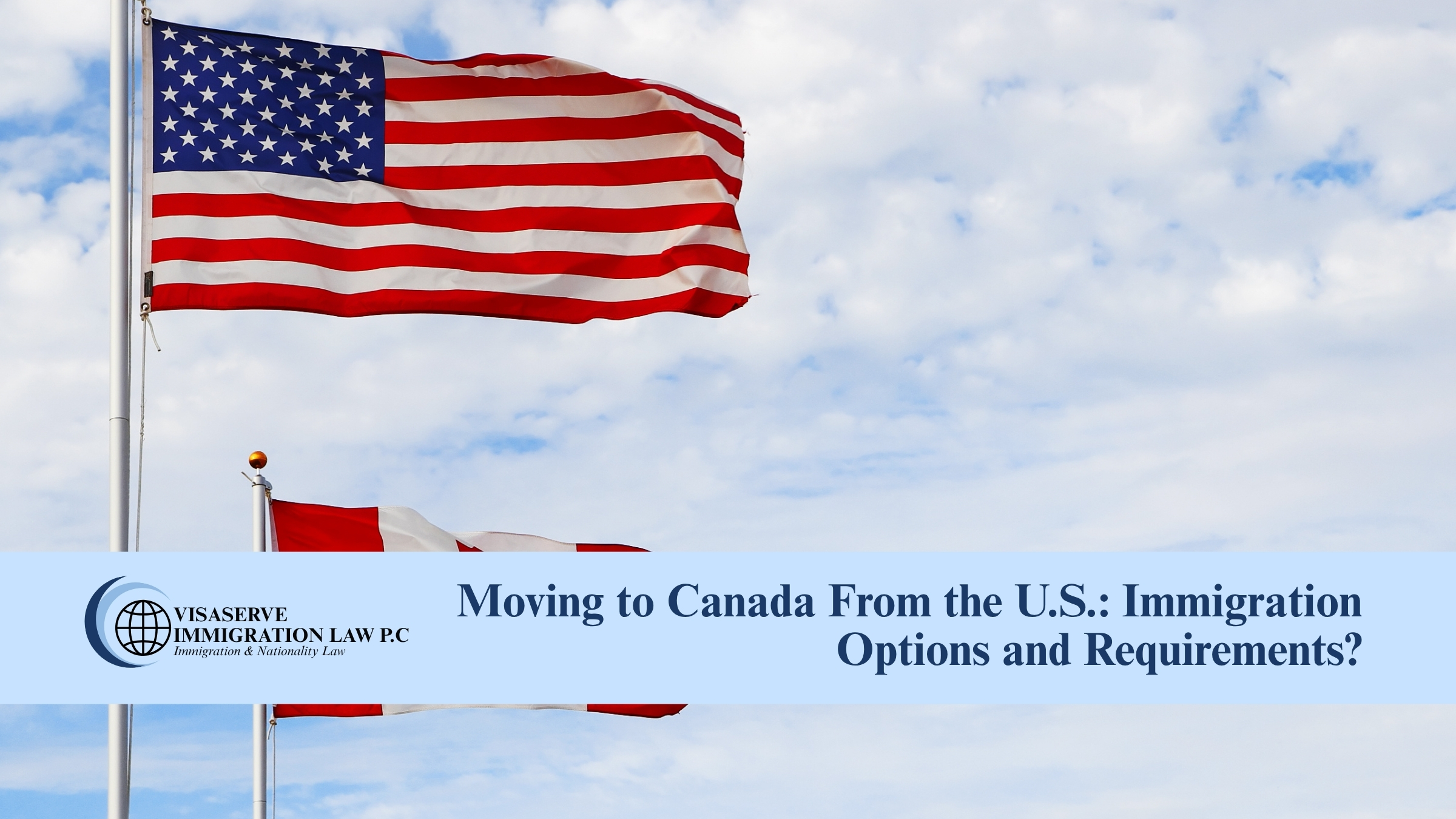
Interest in moving to Canada often rises during major U.S. political or economic events. However, U.S. citizens and residents do not have an automatic right to move, work or remain permanently in Canada. They must qualify under a Canadian immigration program and meet Canada’s admissibility requirements.
Can a U.S. Citizen Simply Move to Canada?
No. U.S. citizens may visit with a valid U.S. passport without a visitor visa or electronic travel authorization, but visitor status does not authorize permanent residence or employment. U.S. lawful permanent residents are also exempt from the eTA requirement but must carry a valid passport and proof of their U.S. status.
What Are the Main Ways to Move to Canada From the U.S.?
1. Express Entry
Express Entry manages several federal economic immigration programs. Eligibility may depend on age, education, skilled work experience, language ability and settlement funds. A Canadian job offer is not required for every applicant, but eligibility does not guarantee an invitation.
2. Provincial Nominee Programs
Provincial Nominee Programs select candidates who can address regional labour needs. Streams may require a local job offer or target particular occupations, French-speaking candidates, graduates or people already working in the province. An accepted Express Entry-aligned nomination adds 600 CRS points.
3. Family Sponsorship
A Canadian citizen or permanent resident may be able to sponsor an eligible spouse, partner, dependent child or certain other relatives. Both parties must satisfy the applicable eligibility, documentation and admissibility requirements.
4. Working in Canada
Most foreign nationals require a work permit. Some U.S. citizens may qualify under CUSMA as eligible professionals, traders, investors or intra-company transferees. CUSMA can facilitate temporary work authorization but does not automatically lead to permanent residence.
Can a Criminal Record Affect the Move?
Yes. A past U.S. conviction may make a person criminally inadmissible to Canada, even if the offence was classified as a misdemeanor in the United States. Impaired-driving convictions can create particularly serious concerns under Canadian immigration law.
Depending on the offence and timing, options may include:
- Individual criminal rehabilitation, generally after at least five years have passed since completion of the sentence, including probation
- Deemed rehabilitation, where the legal requirements are met
- A Temporary Resident Permit for a compelling temporary reason to enter Canada
Approval is not automatic. The offence must be assessed against its Canadian legal equivalent, and sentence details matter.
What Should You Review Before Applying?
Before making plans, review:
- Whether your goal is a temporary stay or permanent residence
- Your eligibility under Express Entry, a PNP or family sponsorship
- Whether you require a Canadian job offer or work permit
- Language tests, education assessments and proof of funds, where applicable
- Any past arrest, charge, conviction, refusal or immigration violation
- The supporting documents required for your selected program
The Bottom Line
There is no single application for Americans who want to relocate. The correct strategy may involve economic immigration, family sponsorship, temporary work authorization or several pathways. Criminal or previous immigration issues should be addressed before travelling or applying.
Visaserve Immigration Law P.C. can assess your circumstances and help you understand the immigration options available to you.