International students weighing where to study have a new factor to consider this year. On July 17, 2026, the U.S. Department of Homeland Security finalized a rule ending “duration of status” for F-1 students, J-1 exchange visitors, and I visa holders, replacing decades of open-ended, program-length admission with a fixed period capped at four years. The change takes effect September 15, 2026, and it fundamentally shifts how international students there need to plan their academic and immigration timelines.
Under the outgoing system, F-1 students could generally remain in the U.S. for as long as they stayed enrolled and in compliance, without a fixed expiration date stamped on their paperwork. Under the new rule, students will instead be admitted only through the program end date on their I-20, capped at four years, after which anyone needing more time must file a formal Extension of Stay application with USCIS, along with a $470 fee and biometrics. Unlike the old system, that extension isn’t automatic. USCIS reviews and can deny it. The post-graduation grace period is also shrinking, from 60 days down to 30, and students completing one degree generally can’t pursue another program at the same or lower academic level while remaining in F-1 status.
For anyone in a longer program, doctoral students especially, or anyone whose plans might shift mid-degree, that adds a real layer of uncertainty that didn’t exist before.
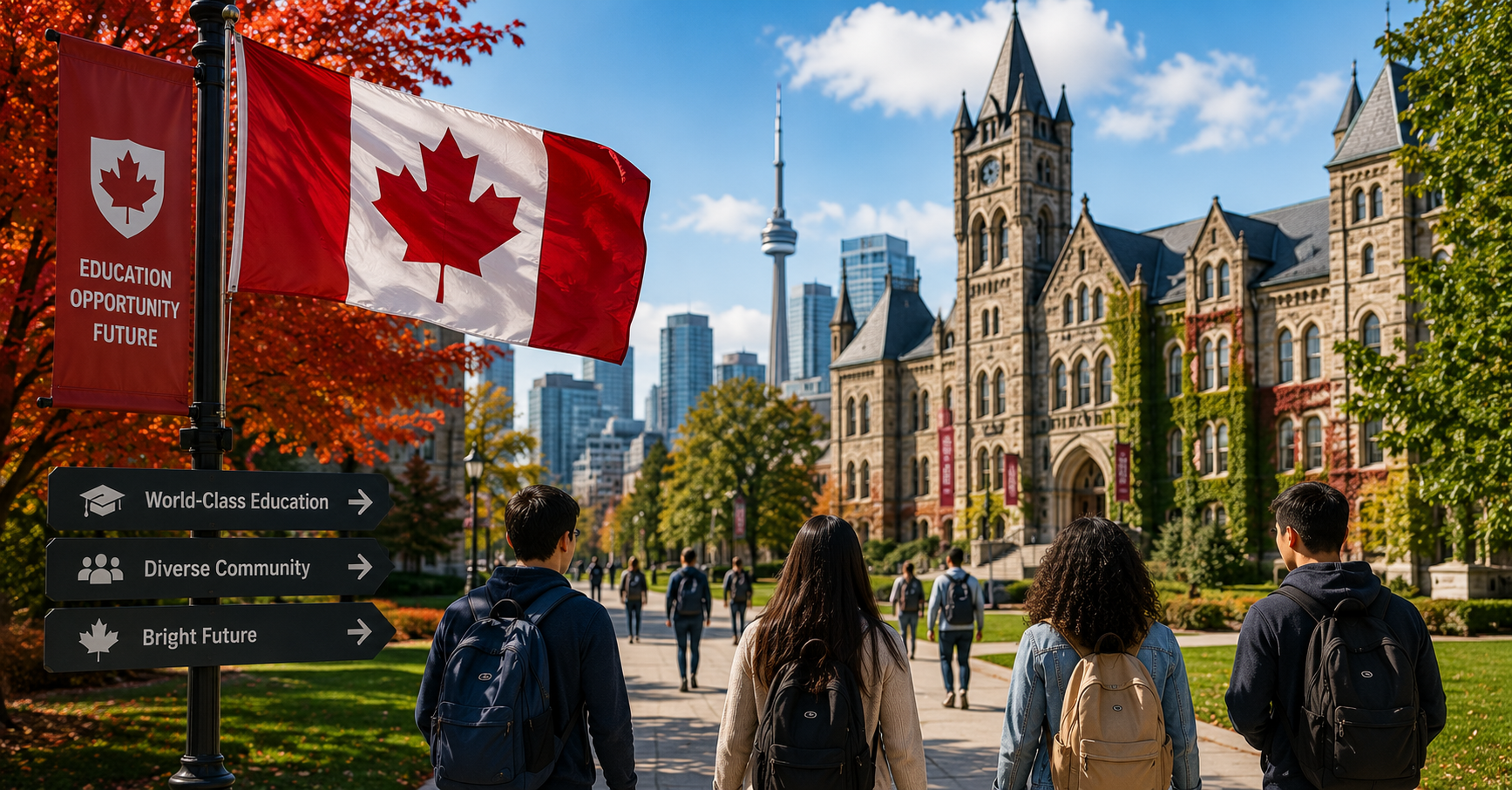
Canada’s study permit system already operates on a fixed-term basis tied to a student’s program length, so this kind of structural overhaul isn’t something Canadian institutions or students are bracing for. A study permit here is generally valid for the length of the academic program plus a set additional period, and the process for extending it if plans change is a routine, well-established one rather than a newly created federal hurdle. Graduates of eligible Canadian institutions also have a clear, long-standing route into the workforce through the Post-Graduation Work Permit, which doesn’t require the kind of employer sponsorship many other pathways demand.
None of this means Canada’s system is without its own pressure points. IRCC has tightened study permit caps in recent years and continues to adjust intake targets by province. But for students specifically concerned about admission stability, the ability to plan a multi-year academic timeline without a sudden new extension-of-stay regime is a meaningful point in Canada’s favor right now.
FAQs
What exactly changed with the U.S. F-1 student visa rules?
The U.S. eliminated open-ended “duration of status” admission for F-1, J-1, and I visa holders, replacing it with a fixed admission period capped at four years, effective September 15, 2026.
Do Canadian study permits work the same way as the old U.S. system?
Canadian study permits are already issued for a fixed length tied to the program, so this isn’t a new adjustment for Canada the way it is for the U.S.
Is it harder to extend a study permit in Canada if my program runs long?
Extensions are a routine, well-established process in Canada, generally requiring proof of continued enrollment and progress, rather than a newly introduced federal filing requirement.
Can international students work in Canada after graduating?
Yes, graduates of eligible institutions can generally apply for a Post-Graduation Work Permit without needing an employer sponsor first.
Does Canada have its own restrictions on international students right now?
Yes. IRCC has adjusted study permit caps and provincial allocations in recent years, so prospective students should still check current intake limits for their program and province.
Reach out to our team at info@visaserve.ca or call 905-203-2266 to speak with an experienced Canadian immigration lawyer today.