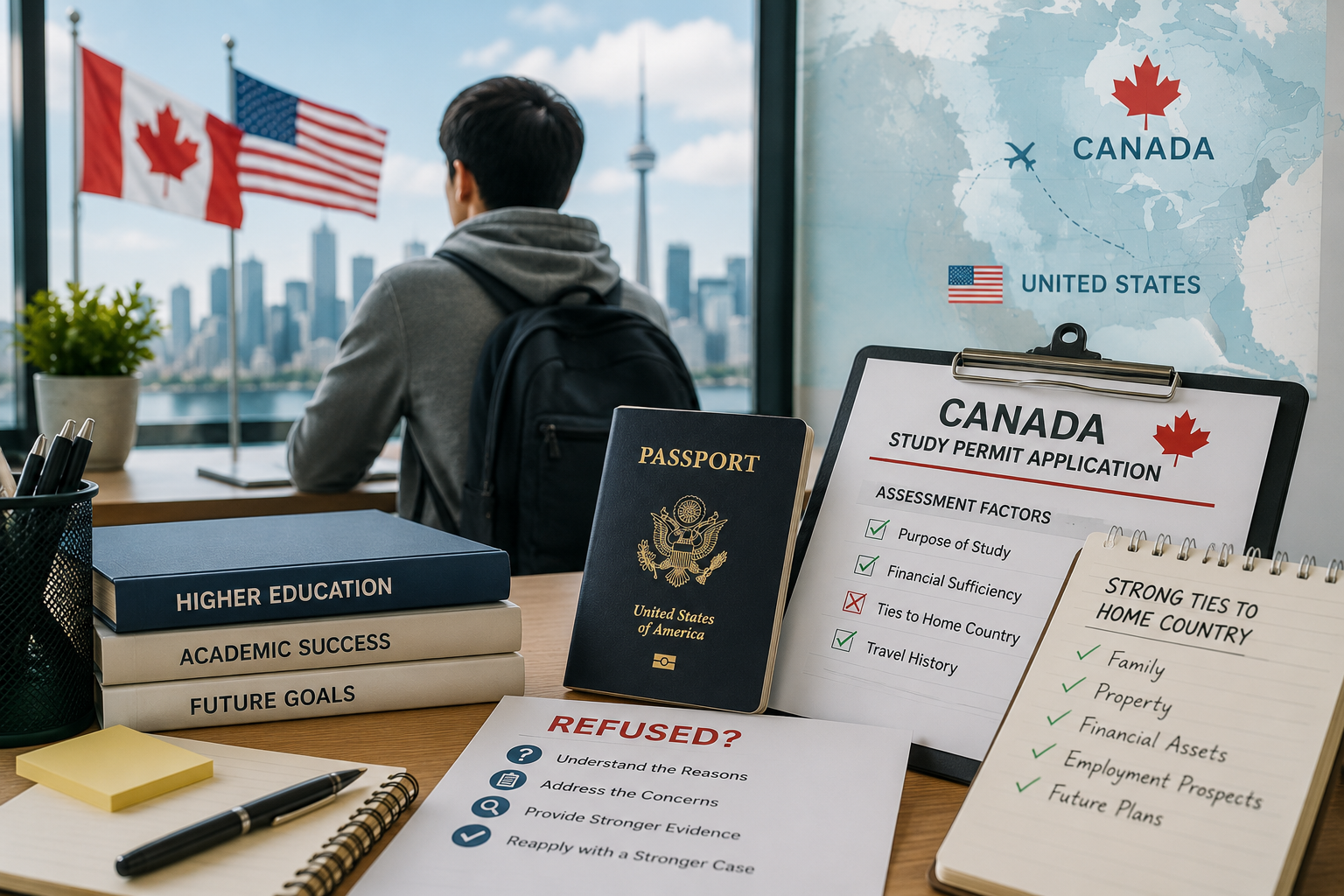
A Canada study permit application isn’t just about proving you can pay for school and that you’ve been accepted. Under section 216(1)(b) of the Immigration and Refugee Protection Regulations, an officer has to be satisfied you’ll actually leave Canada once your studies are done. That means demonstrating strong, current ties to your home country. And for applicants who’ve spent years living in the U.S. under F-1 duration of status, that particular piece of the case can end up weaker than expected.
Here’s the practical issue. If you’ve been in the U.S. for several years on F-1 status without a fixed departure date, your recent history doesn’t show ongoing ties to your home country. It shows ongoing ties to the U.S. A Canadian visa officer reviewing your file isn’t looking at where you were born or where your passport is from. They’re looking at where your actual life has been rooted lately: your employment, your housing, your family’s day-to-day presence. Years spent building a life in the U.S. can read, on paper, as evidence pointing away from your home country rather than toward it.
What tends to strengthen a case in this situation:
- Recent, documented ties to your home country, not just historical ones. A property deed from a decade ago carries less weight than something current.
- A concrete explanation for why you’re applying to study in Canada specifically, tied to a career plan that makes sense given your background.
- Evidence of family, financial, or professional connections that remain active in your home country, not ones that lapsed once you moved to the U.S.
- A clear, honest account of your F-1 timeline. Officers can see gaps or inconsistencies, and a well-explained history is far more convincing than one left vague.
What tends to work against a case:
- Letting the application imply you’re simply relocating from the U.S. to Canada, rather than returning home eventually.
- Weak or outdated documentation of home country ties.
- A study plan that doesn’t clearly connect to opportunities back home.
If a study permit has already been refused for this reason, the refusal letter and GCMS notes will usually spell out exactly what the officer found lacking. That information matters. A second application that doesn’t directly address the specific gap identified the first time is likely to be refused again.
FAQs
Does having F-1 status in the U.S. automatically hurt a Canada study permit application?
Not automatically, but it can weaken the ties-to-home-country portion of the case if the applicant hasn’t maintained clear, recent connections to their home country during that time.
What does “ties to home country” actually mean to an IRCC officer?
It generally covers family, property, financial, and employment connections that suggest a genuine intent to return home after studies, not just citizenship or birthplace.
What should I do if my study permit was refused for weak ties?
Request your GCMS notes to see the officer’s specific reasoning, then address that exact gap directly in a new application rather than resubmitting similar documentation.
Can a strong study plan help offset weak ties documentation?
It helps, but it’s rarely enough on its own. Officers weigh the full picture, so ties documentation still needs to be current and specific.
Should I mention my F-1 history in my Canada study permit application?
Yes. Leaving it vague or unexplained is generally worse than addressing it directly with a clear account of your timeline and your continued connection to your home country.
Reach out to our team at info@visaserve.ca or call 905-203-2266 to speak with an experienced Canadian immigration lawyer today.