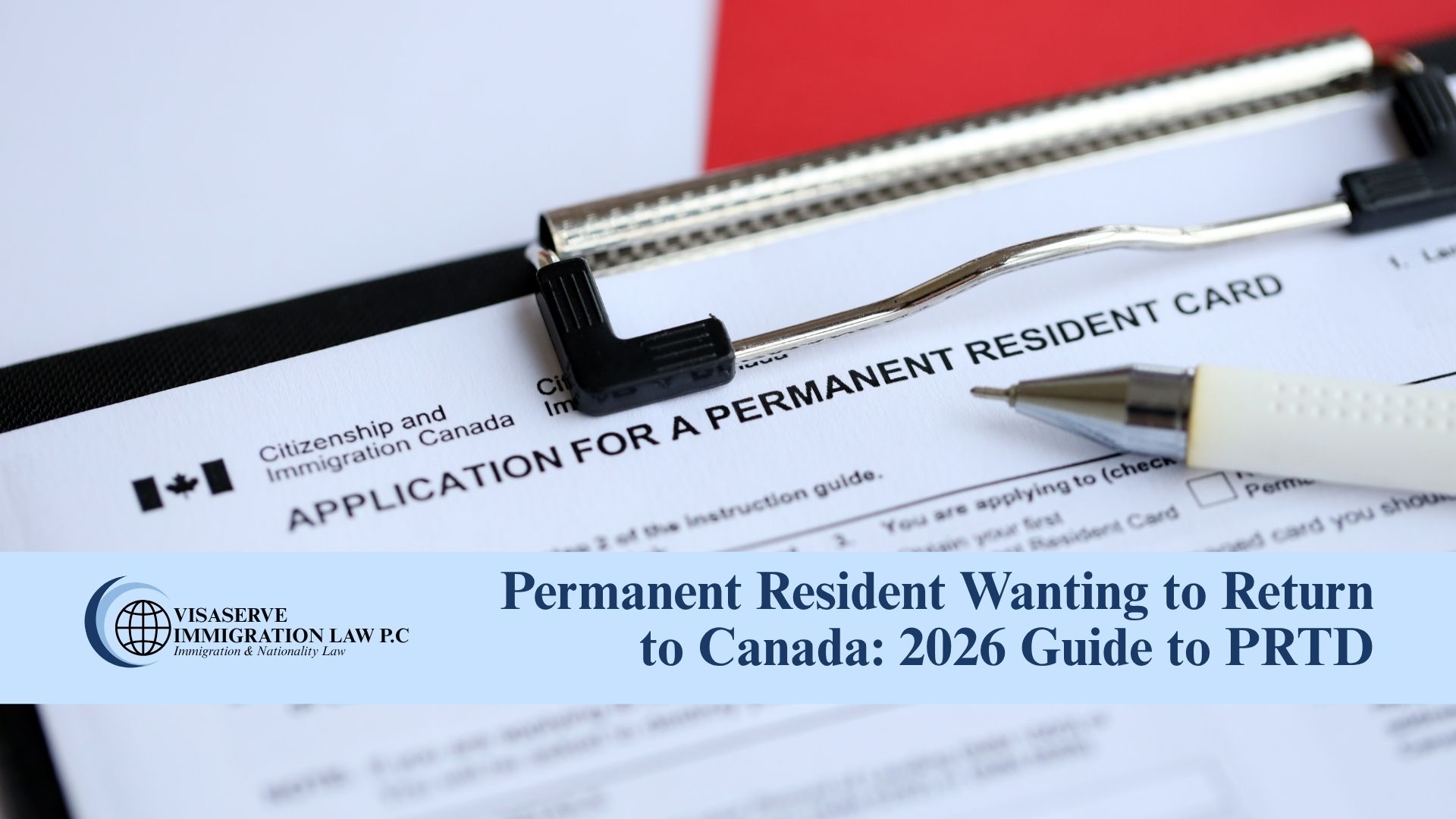
Canadian permanent residents must carry valid proof of status when returning to Canada. If your PR card is expired, lost, or not in your possession while you are outside Canada, you will generally need a Permanent Resident Travel Document to board a commercial carrier and re-enter the country. This guide explains the eligibility criteria, documentation requirements, and application process for a PRTD in 2026 based on official guidance from Immigration, Refugees and Citizenship Canada.
What Is a Permanent Resident Travel Document
A Permanent Resident Travel Document is issued by IRCC to allow permanent residents outside Canada to return using commercial transportation such as flights, trains, buses, or boats. Commercial carriers are required to verify that passengers have valid documentation to enter Canada, and without a valid PR card or PRTD, boarding may be refused.
Who Needs a PRTD
A PRTD is required if you are a permanent resident of Canada, you are outside Canada, and you do not have a valid PR card in your possession. This applies regardless of how long you have held permanent resident status. While entry at a land border in a private vehicle may allow alternative proof of status, most international travel situations require a PRTD.
Residency Obligation Requirement
Eligibility for a PRTD depends on meeting the residency obligation set out under Canadian immigration law. Permanent residents must demonstrate that they have been physically present in Canada for at least 730 days within the last five-year period. This requirement does not need to be continuous and can be accumulated over time.
In certain cases, time spent outside Canada may still count toward the residency obligation. This includes accompanying a Canadian citizen spouse or parent abroad, working full-time for a Canadian business outside Canada, or accompanying a permanent resident spouse who is employed by a Canadian business abroad. Applicants who do not meet the residency requirement may face refusal and potential loss of permanent resident status.
Required Documents for a PRTD Application
IRCC requires a complete and well-documented application. Applicants must submit Form IMM 5524 along with a valid passport or travel document and proof of permanent resident status such as an expired PR card, Confirmation of Permanent Residence, or Record of Landing. Two photographs meeting IRCC specifications must also be included along with proof of payment of the application fee.
Supporting documentation is critical to demonstrate compliance with the residency obligation. This may include tax filings, employment records, leases, utility bills, and travel history records such as entry and exit stamps or itineraries. If relying on an exception to the residency requirement, applicants must provide clear evidence such as proof of relationship or employment with a qualifying Canadian entity.
How to Apply for a PRTD in 2026
Applicants must complete Form IMM 5524 carefully and ensure that all information is consistent with supporting documentation. All required documents should be gathered and organized before submission. The application fee must be paid online through the IRCC system. The completed application is submitted to the visa office or visa application centre responsible for the applicant’s country of residence. Processing times vary depending on location and complexity, and applicants should plan accordingly.
Processing Time and Validity
Processing times are not standardized and depend on the visa office handling the application. Delays may occur if additional documentation or verification is required. A PRTD is typically issued for a single entry, which means it must be used to return to Canada within its validity period.
Common Reasons for Refusal
Applications are commonly refused when applicants fail to meet the residency obligation or do not provide sufficient documentation to support their case. Inconsistencies in travel history or incomplete applications can also lead to refusal. In some cases, refusal may include a formal determination that permanent resident status has been lost.
Key Considerations for 2026
IRCC continues to closely assess residency compliance and supporting documentation. Applicants with extensive travel histories or time spent outside Canada should ensure that their records are accurate and well documented. Early preparation and careful review of the application can reduce the risk of delays or refusal.
Conclusion
A Permanent Resident Travel Document is essential for permanent residents who need to return to Canada without a valid PR card. The application process involves both a travel document request and an assessment of residency compliance. A well-prepared application supported by clear evidence is critical to maintaining permanent resident status and ensuring successful re-entry into Canada.
Need Assistance with Your PRTD Application
Visaserve Immigration Law P.C. advises permanent residents on PRTD applications, including cases involving residency obligation concerns or complex travel histories. Legal guidance can help ensure that your application is complete, compliant, and aligned with IRCC requirements.