Canada has pulled back sharply on standard, low-wage temporary work streams over the past year, but the door for skilled professionals from the United States and Mexico remains wide open. The Canada-United States-Mexico Agreement, or CUSMA, is the successor to NAFTA and continues to serve as one of the fastest legal routes into the Canadian labour market for qualified workers.
The biggest advantage CUSMA offers is skipping the Labour Market Impact Assessment, or LMIA. Normally, a Canadian employer has to advertise a position for weeks, pay a government fee, and prove no Canadian citizen or permanent resident is available for the job before a foreign worker can be hired. Because Canada, the U.S., and Mexico operate under a reciprocal trade agreement, that entire process is waived for CUSMA-eligible workers. Employers instead submit an offer through the IRCC Employer Portal and pay a $230 compliance fee, and the whole process can move in weeks rather than months.
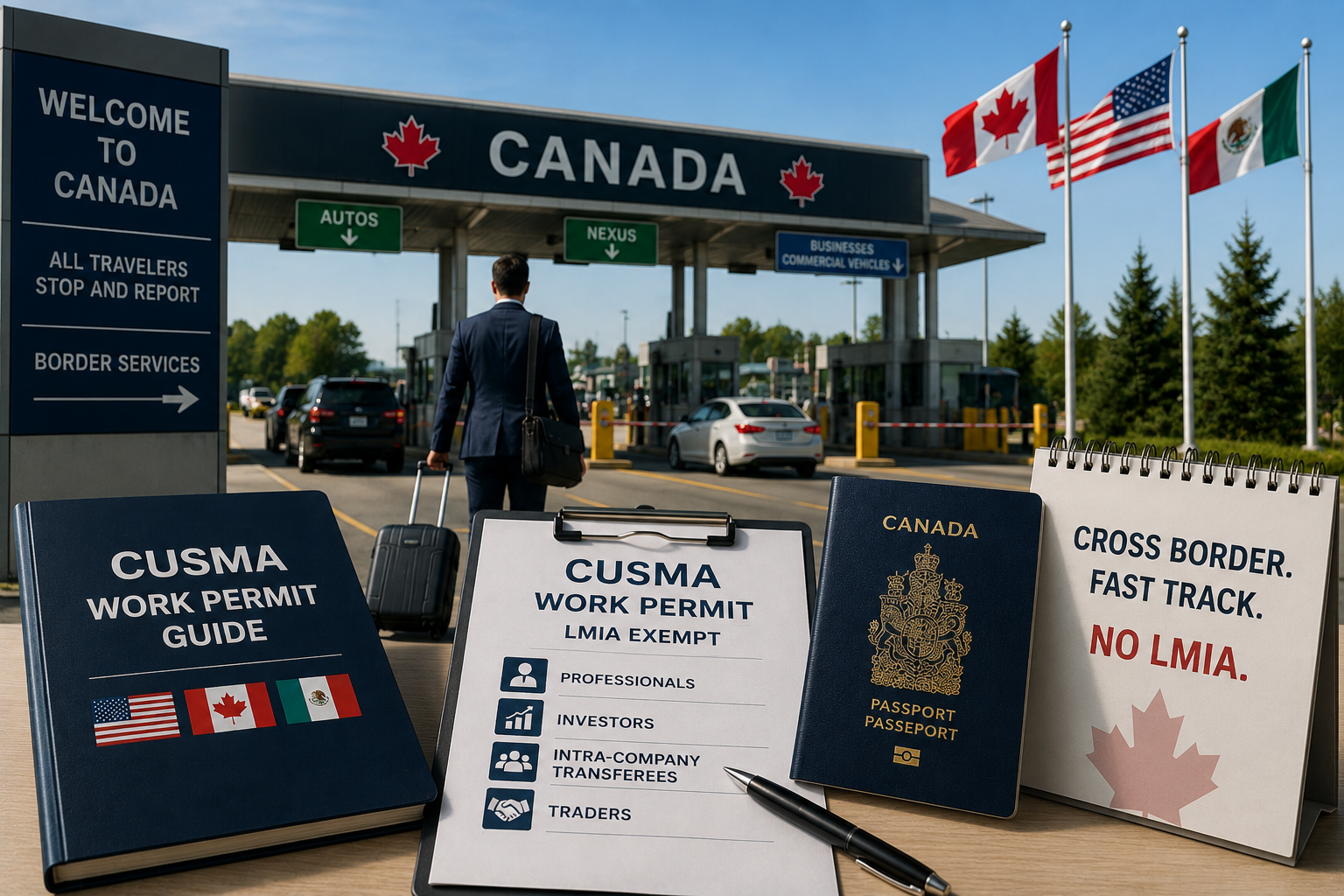
CUSMA covers four main groups of workers. Professionals make up the largest category, covering more than 60 listed occupations including engineers, accountants, computer systems analysts, and management consultants, provided the applicant’s credentials line up with the profession’s specific education or licensing requirement. Intra-company transferees can move within a multinational company to a Canadian branch or affiliate, as long as they’ve worked for the foreign office for at least a year in a managerial, executive, or specialized knowledge role. Traders and investors round out the remaining two categories, covering individuals conducting substantial cross-border trade or directing a Canadian business they’ve invested significant capital into.
One of the biggest perks for U.S. citizens is the ability to apply right at the border. Rather than waiting on a visa office overseas, a U.S. citizen can bring their documents to a Canadian port of entry and, if approved, walk away with a printed work permit the same day. Mexican citizens don’t have that option and must apply online to a visa office in advance, though those applications still move faster than standard LMIA-based ones.
Spouses of CUSMA workers can also apply for their own open work permit, letting them work for any Canadian employer. And a year of full-time skilled work under CUSMA can meaningfully boost an applicant’s Express Entry or Provincial Nominee Program score down the road.
Because so much of the CUSMA process depends on matching a job title and duties precisely to the treaty’s legal definitions, small mismatches are one of the most common reasons applications get turned down at the border.
FAQs
Is a CUSMA work permit the same as an LMIA-based work permit?
No. CUSMA permits are LMIA-exempt, meaning the employer doesn’t need to prove a labour shortage before hiring.
Can U.S. citizens apply for a CUSMA work permit at the border?
Yes. U.S. citizens can apply directly at a Canadian port of entry and, if approved, receive their permit the same day.
Do Mexican citizens have the same border option?
No. Mexican citizens must apply online through a Canadian visa office before travelling.
Can a CUSMA work permit lead to permanent residence?
Not directly, but time spent working in Canada under CUSMA can strengthen an Express Entry or Provincial Nominee Program application.
What’s the most common reason a CUSMA application gets refused?
A mismatch between the job title used and the actual day-to-day duties, compared against the treaty’s specific occupation definitions.
Reach out to our team at info@visaserve.ca or call 905-203-2266 to speak with an experienced Canadian immigration lawyer today.